My Journey and How It Led to The New Yoga
Rob Walker | FEB 26, 2023

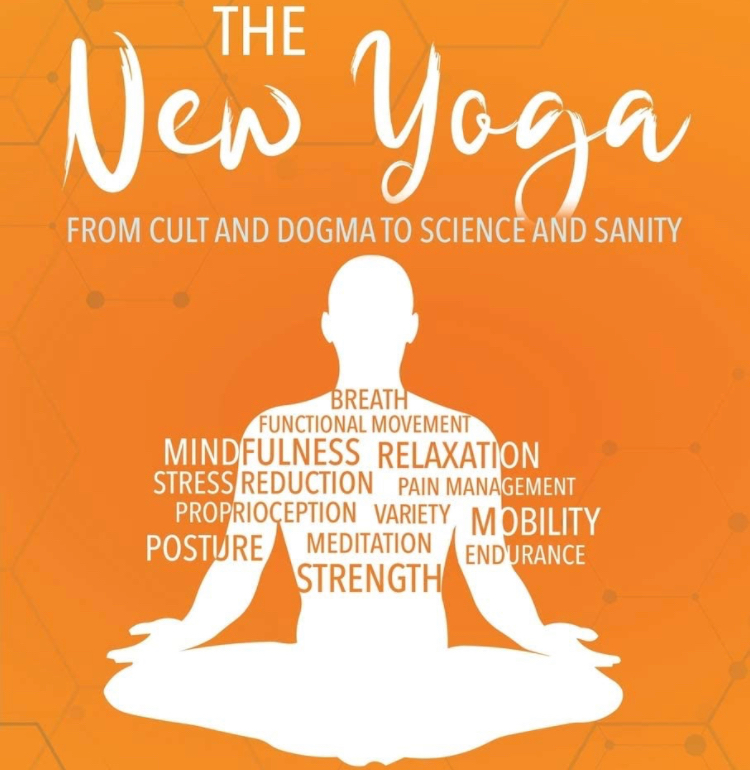
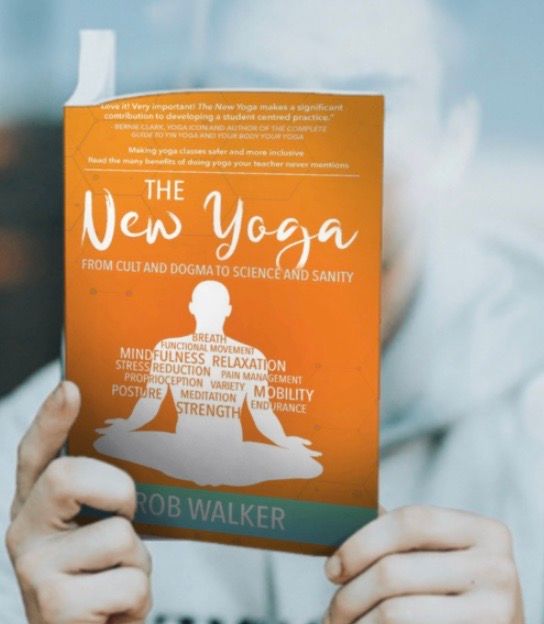
Adapted from the last chapter of The New Yoga: From Cult and Dogma to Science and Sanity.
“I realize I can’t ever know what is the absolute truth, but staying current with the research will allow me to see what might be true.”
—Jules Mitchell, Yoga Biomechanics: Stretching Redefined, 2018
Students coming to my teacher training have little to no idea about where modern postural yoga came from and how it evolved in the West over the past thirty years, or so And without that understanding, it’s hard to see how yoga has become what it is today, what’s worth keeping of that inheritance, and what to cast aside as superstitious, irrelevant, and even dangerous.
I was in the same boat when I went to my first yoga retreat in Mexico in 1994 with senior Calgary yoga teachers, David McAmmond and Margot Kitchen. Back home, I was doing yoga at a non-profit community yoga centre in Calgary, which was one of the first dedicated centres for yoga in North America. Yoga was at the point of transitioning from a fringe activity associated with pot-smoking hippies into a multi-million-dollar business with a yoga studio on every block. I was really in the second wave of modern Western yoga pioneers as the masses started to climb on board.
Back then Bikram, Iyengar and Jois, with their unique teaching styles, set an implicit, if not explicit expectation that yoga was about pretzel-like feats of contortion. I imagined that at some point in the future, I would be like that, too, since at that time, this was the goal, and, as Jois preached: “Practice and all is coming.” My favorite teacher, David McAmmond, while always encouraging and easygoing, implicitly modeled a Gumby-like practice. His splits and drop-over backbends were easily within his seemingly endless limits of flexibility. At that time I believe he was significantly influenced by Angela Farmer and Victor van Kooten—fallen prodigies of BKS Iyengar.
They had developed a style of yoga that relied heavily on extreme partner work and contortions, sometimes involving large exercise balls to support backbends. I loved moving playfully from Virabhadrasana I (Warrior One Pose) into Adho Mukha Vrksasana (handstands) and, with the help of two spotters, dropping over into a backbend. I might also kick up into a handstand against another person’s back while they stood facing away from me and have them lift me by my ankles across their back, move through a supported backbend and drop into Tadasana (Standing Pose) on the other side. They had taken the rigid Iyengar model and run with it to a fun place of playful exploration, albeit at the expense of being cast out from the Iyengar fold.
But, as I continued with these annual workshops, David and his playful style were replaced with senior Iyengar teachers, and the focus became more serious. I was moving in two different directions at that time. I took the first Ashtanga teacher training in Calgary in 1998 and at the same time I was being drawn, through the annual Mexico retreats, into the orbit of senior Iyengar teacher Margot Kitchen and other senior Canadian and American teachers like Felicity Green from Washington State and Shirley Daventry French from Vancouver Island, BC.
In 2001, I quit my successful career as a journalist and bought, as it was then, the first commercial yoga studio in Calgary, which was in its fifth year of meteoric growth. Coincidentally, it just happened to be an interesting turning point in the yoga world. Oprah Winfrey invited yoga icon Rodney Yee onto her show and yoga was fast becoming mainstream and respectable. Nonetheless, I could not have bought into yoga in a worse way, and at a less fortuitous time. Hot vinyasa and Bikram yoga were the new trends, with ashtanga hard on their heels. The so-called “hatha” or slow-moving, precise alignment-based style of Iyengar’s yoga was falling out of fashion. It has never really recovered. Within my first year of operation, a dedicated Bikram studio opened down the street and a new ashtanga studio blossomed downtown.
Although I continued to teach the flowing style of ashtanga yoga, I redirected my focus to meet the demands of Iyengar certification and the exclusive nature of Iyengar training. That was both a big help in disciplining my learning, and also enhancing the progress of my understanding. But it also blinded me to its limitations and to the more inclusive and accepting culture beyond its narrow confines. In my opinion, Iyengar was undoubtedly a genius, but his extreme control of yoga practice left his followers continually looking to him and his senior teachers for direction. That came in many nuanced ways, which discouraged students from being open to the advances of evidence-based movement and to their own interoceptive discoveries. It also precluded certified Iyengar teachers from teaching unauthorized poses.
I took four levels of Iyengar certification in three steps from 2001 through 2003 and 2007. I went to Pune, India, three times in 2003, 2005 and 2007 to study with the Iyengar family for a month at a time. Iyengar himself was no longer teaching classes but was always present doing his own practice and offering comments from the back of the room. The family was aloof and appeared to despise the largely Western students who put up with endless caustic and belittling comments from Geeta Iyengar, in particular.
While she was certainly an extremely knowledgeable teacher, her students ascribed to her almost supernatural qualities that, for them, forgave her abusive teaching style. Unfortunately for many Iyengar teachers, the abruptness, the dogmatic assertions, and the abrasive style sometimes rubbed off to give Iyengar yoga a bad name.
I inherited a yoga teacher-training program from the previous studio owner in 2001. It broadly followed Iyengar yoga lines, but nonetheless eventually fell afoul of the Iyengar Yoga Association of Canada, which was evolving its own training programs and would not countenance a training that didn’t meet Iyengar’s new set of rules—rules so rigorous as to drive Iyengar Yoga out of mainstream yoga culture.
From the start, Iyengar Yoga teacher training requires a trainee to have studied with a certified Iyengar teacher regularly for three years. This is merely the first stage. To remain certified, Iyengar teachers are expected to take higher and higher certifications every two years, or so, on a protocol that comprises thirteen levels.
In 2007 I stopped teaching the unauthorized program and ran an approved program with Kitchen for a year with ten people. But by the following year, we had run out of qualified applicants. Today, when I ask new trainees on day one whether they’ve heard of Iyengar, perhaps one or two hands go up in a room of twenty or more people. By 2007 my struggle to find a compromise with the Iyengar Yoga Association of Canada led me to leave the fold and continue my own training programs under the auspices of the US-based Yoga Alliance (YA).
There is, no doubt, value in the rigor of Iyengar Yoga training. But outside the Iyengar world, it is not commercially viable to offer training that is more demanding of time and outlay, and is beyond those standards required by the YA. Yoga is not a profession regulated by a governing body in the same way as massage and physical therapy, so the training outside of Iyengar’s orbit largely follows the limited requirements of the Yoga Alliance.
The YA has become the de facto worldwide standard-setting and credentialing organization. Becoming a YA-approved yoga teacher requires 200 hours of study with a YA-certified and experienced teacher in an approved school. When I became one of the last people to be grandfathered in in 2012, I submitted details of 6,000 hours of training and fourteen years of teaching—evidence that supported an Iyengar background. To become a senior YA-approved teacher trainer requires 500 hours of training and the requisite teaching experience.
The YA lenient standards means finding a good yoga teacher these days is a hit-and-miss affair. Any definition of yoga is so disparate, it makes one style of yoga barely recognizable to another and, as a result, the YA requirements are vague, all-inclusive and, furthermore, certification requires no more than to attend a recognized program for 200 hours. At the time of writing, the YA is facing mounting criticism, consequently, certification requirements are changing to be more rigorous and are being phased in over a number of years.
In 2012, I was happy to sell my somewhat Iyengar-style studio and focus on what I really enjoyed—teacher training. It got off to a great start and continues to produce competent yoga teachers trained within the boundaries of YA requirements and competing YA-approved programs. I sold the Alberta Yoga College in November 2021.
Back in 2012, New York Times journalist William J. Broad rocked the yoga world with The Science of Yoga: The Risks and Rewards. It detailed the potential for injury with the migration of yoga from a culture for young Indian boys to the desk-bound weekend warriors of the West. It highlighted the false and the fair claims of yoga for bodily health and mental harmony.
As some of the first wave of Western yoga teachers found themselves suffering hip, knee, neck and back injuries, the more reflective among them have pulled back from extreme yoga poses and focused on safety, evidence- based yoga, and functionality. Top yoga teacher and ‘pretzel,’ Jill Miller, who had a total hip replacement in 2017 at age forty-five, is a classic example of those whose vigorous practice of Cirque du Soleil-style contortions gradually destroyed her hip.
With Broad’s perspective highlighting a growing concern in the yoga community about yoga’s potential for injury—as well as its amazing healing potential—I started to appraise honestly my own history of yoga injury. I was gradually emerging from a couple of decades of denial and a failure to assess the overall relationship of risk and reward.
My worst injury happened while attempting the Iyengar version of the seated twist, Ardha Matsyendrasana. (No other school of yoga does the pose this way.) I had never been instructed in the pose and was asked to teach it in in 1998 in Kitchen’s then informal Iyengar training class. Working from a description in an Iyengar book, I sat on the knife-edge of my dorsiflexed foot and felt an intense pain in my calf and right knee.
A year later and after months of agony, I had a partial tear in my meniscus successfully repaired. I can recall a hamstring injury in the 1990s brought about by over-intense forward bends and a sacroiliac injury in the 2000s from attempting to accomplish wrapping my arms around my bent leg in a (Marichyasana III) seated twist. I later had a curious injury in the back of my left knee, which made it challenging for a few months to accomplish Virasana and Vajrasana (seated poses with the feet under or to the side of the buttocks).
In the early 2000s, I was fascinated and intrigued by Norman Sjoman, a Calgary yoga teacher who had studied with Iyengar in the 1960s before Iyengar became famous. His adjustments were like those of Iyengar himself, harsh and fast, as Sjoman described them. In his backbend classes, we would warm up in Pinca Mayurasana (Peacock’s Tail, a forearm balance). Sjoman would stand behind us, push his toes between our shoulder blades while pulling our feet up and in the opposite direction. He would always jam his knee into our ribs in a revolving seated forward fold (Parivrtta Janu Sirsasana).
Before I quit those classes, I sustained some knee pain from Vatayanasana (Horse Face Pose) and a rotator cuff injury from a backbend assist mentioned earlier. To be fair, nobody forced me to attend those classes and it was exhilarating at the time to do yoga with a teacher who had an almost unique knowledge of advanced postures. Some others went on to master the most advanced poses, apparently without injury. The apex of this journey for some was to do 108 Viparitas (drop-over backbends from standing), which about half a dozen colleagues managed, to my knowledge.
Several years ago I had a right hip replacement, which may or may not have been the result of my yoga practice. My injuries have helped my sensitivity in teaching, altering my perspective to seeking the health and functional benefits of yoga. Unfortunately, social media gurus largely influence the current concept of yoga, particularly on Instagram and YouTube, where teachers like Kino MacGregor accumulate millions of followers who risk injury as they aspire to her flexibility.
These days, I mention in class just five physical benefits of yoga: posture, strength, endurance, balance and . . . oh, yes, flexibility. While by no means a complete list of benefits, it does help students focus on advantages beyond the greatly overstated flexibility factor. I am not as concerned with the military precision of Iyengar alignment—it has to pass the test of functionality first. For example, his obsession with the front shin stacked at ninety degrees over the ankle is now not seen to be vital from a biomechanical standpoint, according to Bernie Clark and other authorities. Many of Iyengar’s alignment cues are aesthetic rather than functional, but that too has purpose in bringing grace and beauty to yoga practice, and more proprioceptive awareness.
My focus has shifted from trying to get everyone to fit Iyengar’s Light on Yoga-version of the asana to helping them find their best expression of the pose, discouraging competition and reducing risk of injury. Those who are physically adept are still encouraged to have terrific Iyengar-style alignment, but stiffer students are encouraged to see themselves as equal—which they are. I tell them it is about showing up on the mat rather than getting your feet behind your head.
I am extremely grateful for the Iyengar training, which taught me to “teach” and to “see” what needs to be corrected rather than just lead a class from the front as many now do.
Many trainees report they have a hard time returning to teachers they once enjoyed. They realize many dangerous misalignments go unnoticed and uncorrected and that many risky things still happen in yoga classes. Examples include students being encouraged to attempt shoulder stands without proper shoulder support and who are refused the option of doing headstands against a wall. At the time of writing, I have welcomed a new couple from Vancouver to public classes. They tell me, despite years of yoga experience in many classes, they never received detailed feedback on their postures from the teachers who simply stand at the head of the class and lead, rather than actually teach asana.
Once I would vigorously defend doing an asana a certain way because that was the way Iyengar apparently taught it. However, my trips to India have demonstrated that many Iyengar teachers come back with a very rigid view, based on a snapshot in time, there. In fact, the Iyengar family frequently varied the way asanas were taught. Uttitha Parsvakonasana (Extended Side Angle) was always presented to me in Canada with the lower arm necessarily reaching down the little toe side of the front shin—which I always found awkward. So, I was delighted to see it presented on either side of the shin in Pune, the way I now teach. My watchword phrase has become, “It depends.” It depends on what you are doing the pose for, as to how you express its form.
I would once have outlawed the current fashion for letting the bottom hand hang in space in Trikonasana (Triangle Pose). I still have biomechanical reasons for not liking that. But, rather than make my trainees wrong, I say with a smile, “it depends” on what you are trying to achieve. Pressing the bottom hand against the inside of the front shin can help with opening the chest. However, the upper body becomes supported by the low back and quadratus lumborum, which tends to curve the spine laterally and encourages the chest to collapse.
I live in a state of continual revision and reassessment about what I teach and approve of. Trainees have recently given me a pair of socks and later a mug both inscribed with the words, “It Depends!” This reflects their humour around my continual use of the phrase.
I raise my eyebrows over the enormous number of outdated claims on social media and the internet in general about yoga—often over-inflated claims of the benefits and dangers of certain poses lacking real evidence to back them up. Much yoga teaching leads to and emanates from these claims. So it would be wise for us to heed the wisdom of the so-called Dunning-Kruger effect—a type of bias in which people believe that they are smarter and know more than they really do— named after two American social psychology professors. It leads them, especially the more celebrated and famous – of whom some of this book has been about – to overestimate their own capabilities.
An exception is Jules Mitchell, the icon of yoga biomechanics. In her new book, Yoga Biomechanics (2017) she explains her position: “All my studies . . . seemed to confuse my understanding of asana, not elevate it,” she says—a perspective I entirely share! “I realize I can’t ever know what is the absolute truth, but staying current with the research will allow me to see what might be true.”
So Mitchell sums up the thrust behind what I am calling The New Yoga: continually striving to keep abreast of new research, showing humility in the face of uncertainty and listening to the wisdom of the gurus, but refusing to buy into their infallibility.
Adapted from the last chapter of The New Yoga: From Cult and Dogma to Science and Sanity.
📷
Rob Walker | FEB 26, 2023
Share this blog post