Strong Knees, Strong Practice: Why Muscles Matter More Than You Think
Rob Walker | SEP 3, 2025
Strong Knees, Strong Practice: Why Muscles Matter More Than You Think

The knee is a marvel of engineering—capable of carrying our weight, absorbing shock, and giving us the freedom to move with grace. Yet it’s also one of the most overworked and injury-prone joints in the body. About one in four adults experiences chronic knee pain, often from wear, tear, or simple overuse.
Here’s the good news: we aren’t helpless passengers in this story. By strengthening the muscles that support the knee—on the front, back, and sides—we can dramatically improve stability, reduce strain, and move with more ease. Think of the muscles as the scaffolding and the shock absorbers of the knee. If they’re weak, the joint takes the punishment. If they’re strong, the joint breathes a sigh of relief.
The Unsung Heroes: Quads, Glutes, and Calves

The quadriceps, that big sheet of muscle on the front of the thigh, acts like a brace for the knee. Weak quads mean more pressure on the joint itself, while overly tight quads can pull the knee out of alignment.
Behind the leg, the glutes and hamstrings—the so-called “posterior chain”—pick up just as much responsibility. When these muscles tire, the way we walk shifts, and the knee ends up caught in the crossfire. Finally, even the calves and ankles play their part; poor ankle mobility can ripple upward and create knee problems.
This whole system is a reminder of one of my favorite yoga principles: no joint works in isolation. Every movement is part of a chain.
How Yoga Fits In
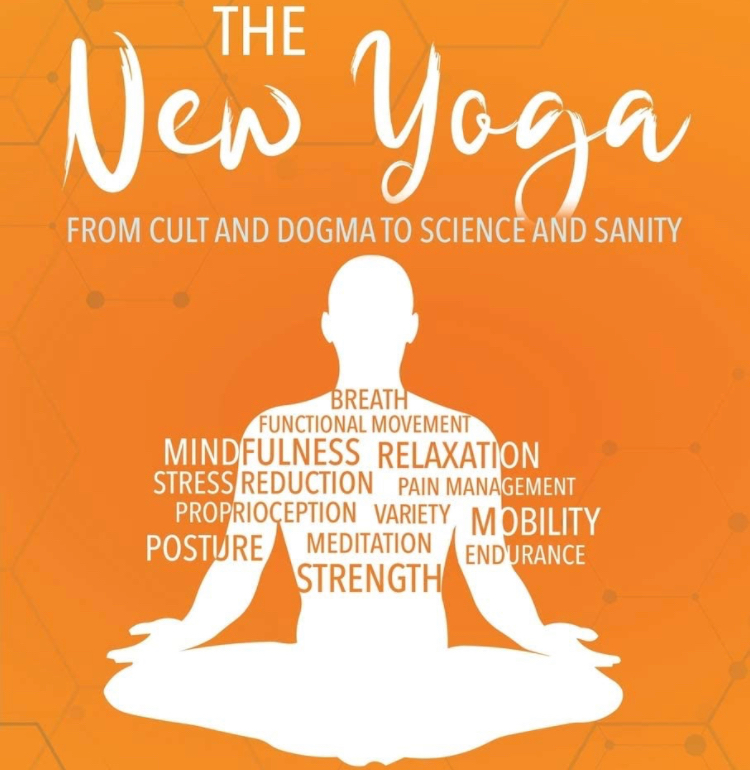
In The New Yoga, I often emphasize that postures are not about chasing shapes but about building function. This is especially true for knee health. A simple sequence can double as joint protection if you approach it with strength, awareness, and variety.
Take Shuktiasana (Clamshells), for example. While often taught as a rehab exercise, it’s also a brilliant yoga-friendly move. Lying on your side and lifting the knee against gravity—or a band—lights up those outer glutes, the very muscles that stabilize your pelvis and protect the knees.

Or consider Utkatasana (Chair Pose) or Malayan (Squats). Done with care, they strengthen the quads while training proper alignment: chest lifted, weight back, knees tracking with the toes.
Even Mountain Pose Heel Raise is surprisingly powerful. This variation involves standing in Mountain Pose and then lifting your heels off the floor to rise onto the balls of your feet, strengthening the calf muscles and improving balance.
Here’s how to practice it:
· Stand tall in Mountain Pose (Tadasana) with feet grounded and arms at your sides.
· Inhale to lift your heels as high as possible, rising onto the balls of your feet.
· Hold briefly at the top, feeling strength through the calves and balance through the feet.
· Exhale to slowly lower your heels back to the floor with control.
Practical Takeaways for Your Knees
· Work the muscles that surround your knees at least once or twice a week.
· Start small: one set of 10–12 reps can be plenty at first.
· Focus on form, not ambition. Knees are unforgiving if we get sloppy.
· Progress gradually with mindful repetition or a light band.
Why This Matters Beyond the Mat
Healthy knees aren’t just about pain prevention; they’re about independence, balance, and confidence as we age. Strong muscles mean we can climb stairs, get up from the floor, or hold Warrior II with steadiness. They mean fewer injuries, more resilience, and more joy in movement.
For me, that’s the heart of yoga—not flexibility for its own sake, but the strength and awareness that let us move through life with freedom. The body is whispering: support me, and I’ll support you.
Join me in class in the coming weeks and months as we explore these knee-supporting movements in practice. Let’s build strength, stability, and confidence together.
Namaste,
Rob

Rob Walker | SEP 3, 2025
Share this blog post