Ten Mistaken Cues Many Yoga Teachers Still Make
Rob Walker | APR 29, 2023
Ten Mistaken Cues Many Yoga Teachers Still Make
I am shocked that many well-meaning yoga teachers still give erroneous cues handed down from teacher . . . to teacher . . . to teacher over the decades without anyone staying abreast of contradictory findings emerging from current biomechanics.
I am sure you’ll have heard some of the following 10 erroneous cues at your local yoga studio that just won’t seem to go away:
1. “Never put the raised foot on the opposite knee in tree pose (Vrksasana).”
This is unnecessary nonsense. The pressure of the raised foot on the opposite knee is never strong enough to damage the knee joint, says Yoga icon Bernie Clark in Your Body Your Yoga.
2. “Never let the knee move ahead of the ankle” in Warrior (Virabhadrasana) poses, Low Lunges (Anjaneyasana) or Chair Pose (Utkatasana), they’ll stress with a frown.
I say, by all means give that cue in Warrior poses, but only for esthetic reasons. It looks nicer, even though the revered father of modern postural yoga, Krishnamacharya’s knee soared ahead of his ankle. The truth is you won’t harm the knee by letting it move ahead of the ankle. Consider, for example what happens in powerlifting – or when you’re simply going up stairs!
3. “Keep the feet parallel” in Tadasana, the standing pose you are told.
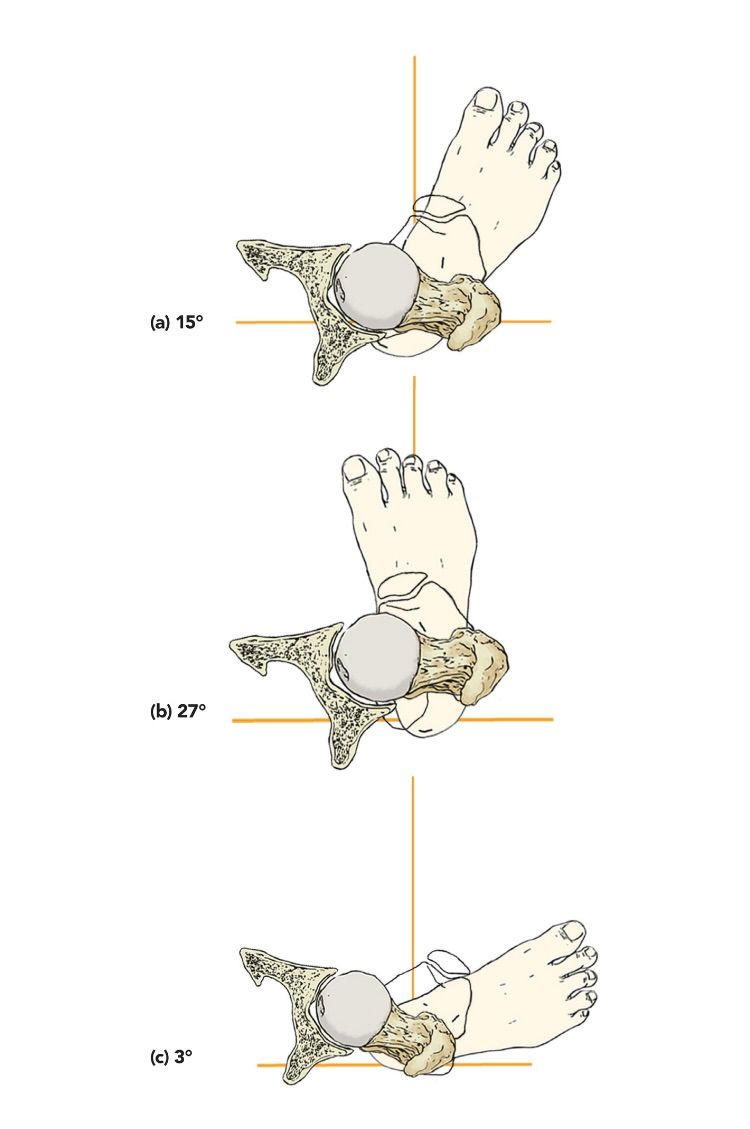
While this works for most people, some have considerable natural torsion (twisting) in the femur (thigh) and/or tibia (shin) bones which means if the feet are parallel it forces the knees to turn unnaturally in or out. More important is to have the knees facing forward. But even that can be awkward for some. So give the cue with provisos and let students decide for themselves.
4. “Practice and all is coming”
is a common cue originating from Pattabhi Jois, particularly in Ashtanga Yoga classes which he created and a reason for many yoga injuries. That direction creates a false expectation that, ignoring how attempting the pose actually feels (interoception), to your body, you should keep trying harder, even with the help of strong but misplaced adjustments. This ignores skeletal limitations to your body, says Clarke.
5. Yoga teachers almost universally emphasize stretching as the main goal of yoga.
This error crept into yoga through the influential teachings at the Mysore Palace in the 1930s, and again from Pattabhi Jois, who continued throughout his life to teach Westerners as if they were teenage Indian boys! Over many decades this myth has put off many inflexible students. They then miss many other important benefits of yoga, including strength, balance, mindfulness and proprioception (body awareness). It also continues on social media to promote the serious error that highly flexible people are somehow “better” at yoga.
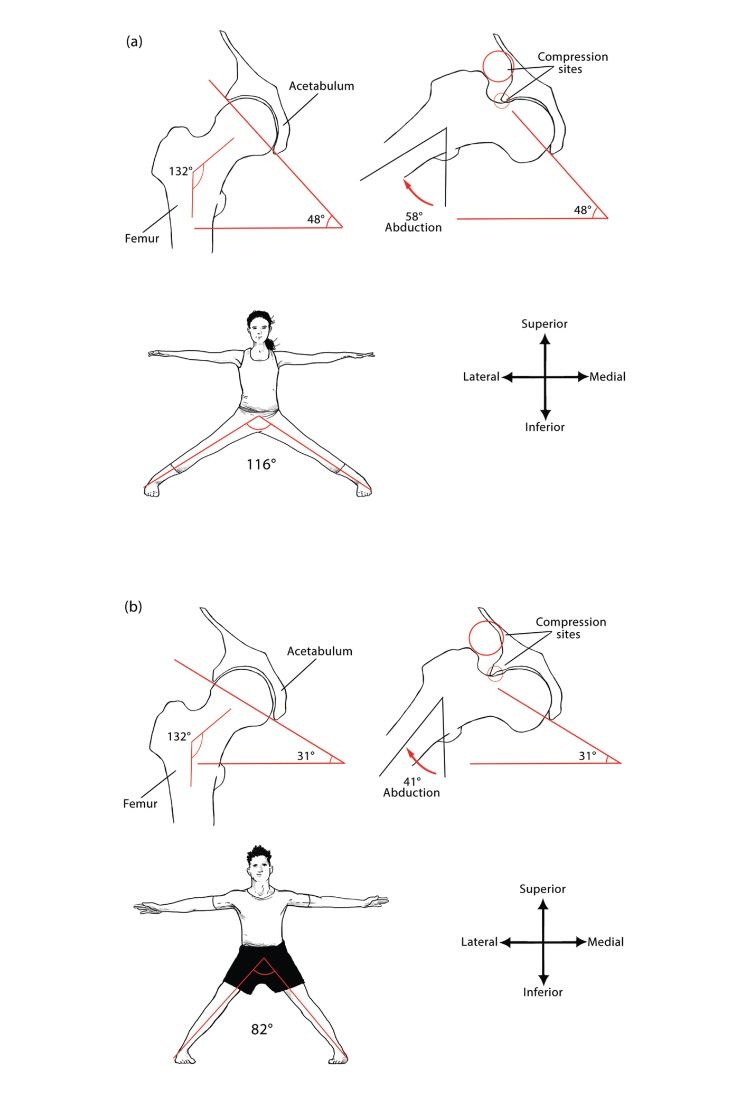
6. Some yoga teachers will tell you to “align your hands over your ankles in wide legged forward folds (Prasarita Padottanasana).”
This ignores how wide your feet will go through unalterable restrictions in the bony hip socket.
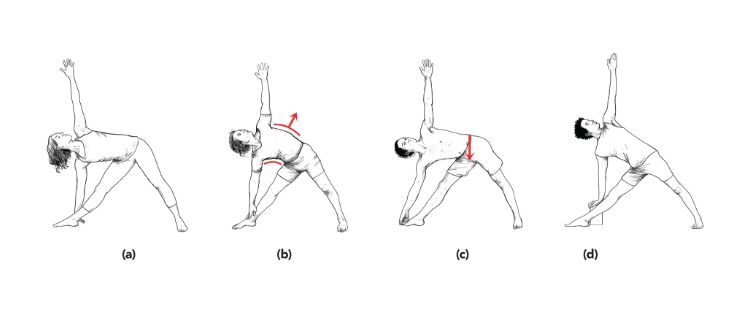
7. “Reach your hand to the floor,” they often say in Triangle (Uttitha Trikonasana) Pose.
The emphasis should in fact be pivoting from the hip crease when extending to the side, while keeping the spine straight and extended equally on both sides. The straight spine should determine where the hand reaches – and it may be higher on the leg than you expect.
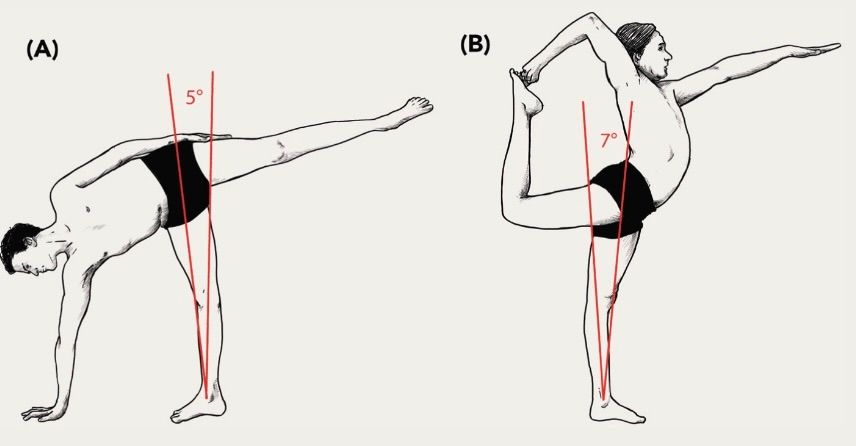
8. “Micro-bend the knee.”
Another cue that ignores the biomechanics of the knee. For most people there is no danger from straightening the leg fully, provided the pose is done mindfully and the quads are strongly engaged to prevent hyperextension. To continually micro-bend the knees misses the hamstring stretch in forward folds and is simply an unnecessary cue. (The exception is Yin Yoga where the intention is different.) Also, listen to your own body, especially in Triangle Pose where hyperextension in the front leg can be painful.
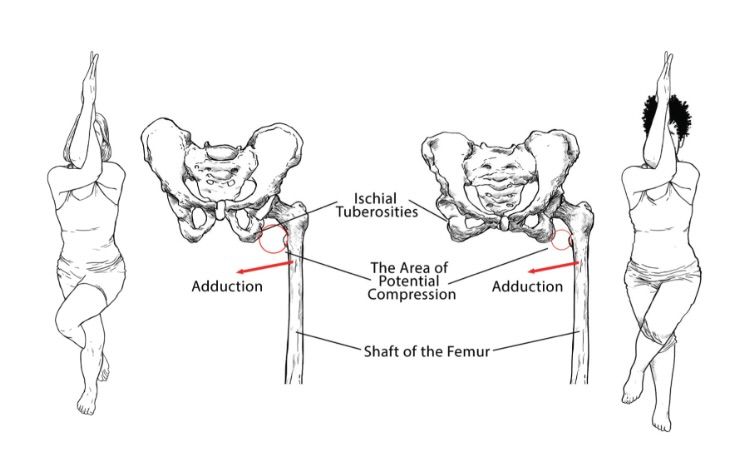
9. “Wrap your foot around the opposite calf” in Eagle Pose (Garudasana).
The distance between the greater trochanter and the ischial tuberosity determines whether this is even physically possible, yet it was strongly encouraged in a workshop I took in Kelowna, BC., with senior Iyengar teacher Ramanand Patel.
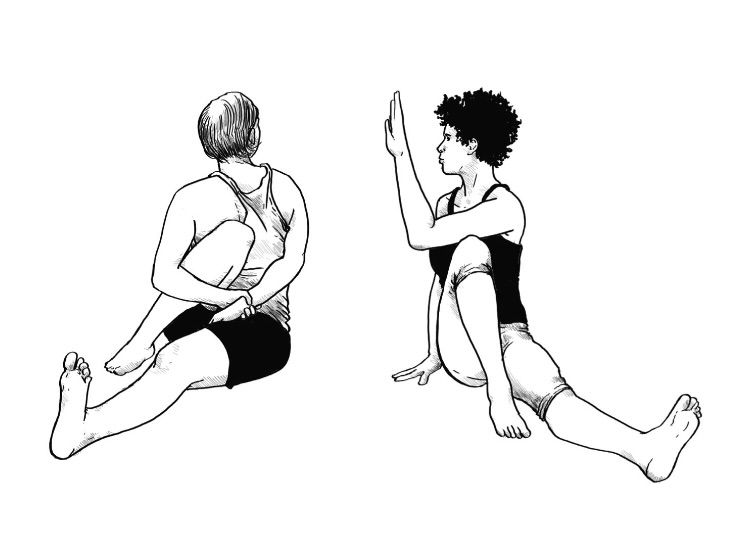
10. “Wrap the arm around the opposite leg and join the hands” in Marichyasana III (Seated Twist).
We were given this direction by Faeq Biria, a world famous Iyengar teacher at a major Victoria, BC. workshop in the early 2,000s. Fellow students were encouraged to assist with pulling the arm round the thigh and shin to allow the hands to bind. This, like many over-torqued twists can - and did - lead to sacroiliac injury. Holding the front of the shin with the opposite hand is equally effective.
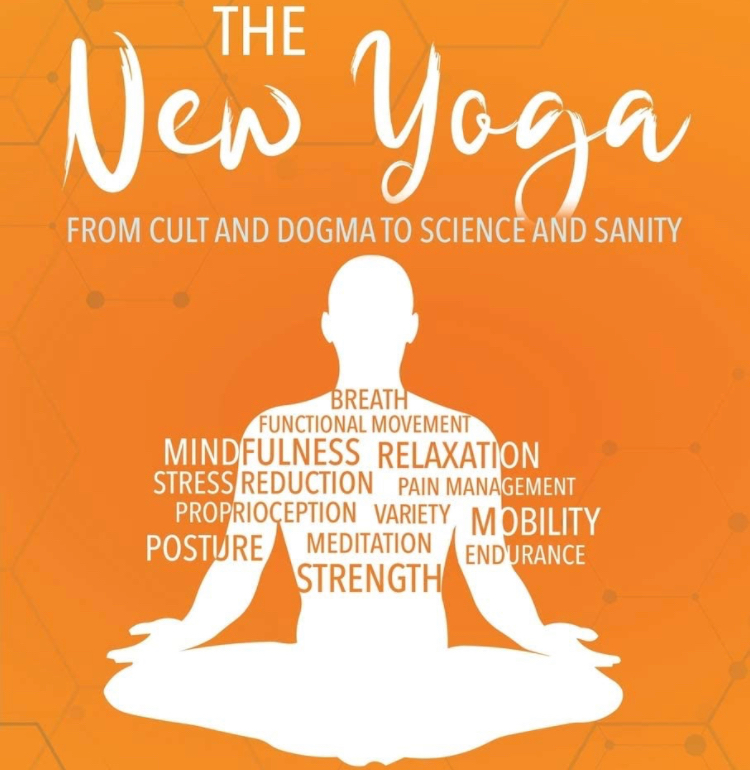
Learn more on pages 52-54 in my book, The New Yoga: From Cult and Dogma to Science and Sanity.
For more of the science behind the 10 mistaken cues read Your Body Your Yoga by Bernie Clarke, one of the most valuable books on challenging the science – of lack of it - behind many yoga cues!
Rob Walker | APR 29, 2023
Share this blog post