The Cue Should Serve the Student—Not the Shape!
Rob Walker | JUL 31, 2025
The Cue Should Serve the Student—Not the Shape!
Rethinking Alignment in the Age of Functional Yoga
By Rob Walker
When I began teaching yoga more than 25 years ago, I carried a mental checklist into every class: toes must point here, knees must stack there, and the final pose should resemble the one in the book. That was the gold standard. Or so I thought.
But here's what I’ve learned: the gold standard often turns out to be pyrite, fool's gold—shiny, rigid, and a recipe for injury and disappointment.
Too often in yoga, cues are designed to chisel students into shapes. Shapes with names. Shapes with lineages. Shapes with assumed benefits. The problem is, bodies often don’t want to be shaped - often mis-shaped! They want to move with fluidity. They want to feel healthy. And most importantly, they want to function successfully.
What Are We Actually Cueing?
Let’s take a common example:
“Square your hips to the long edge of the mat in Triangle”
Why? Does it improve function? Or are we simply trying to mimic a photo in Light on Yoga?
Often, this cue risks stressing the sacroiliac joint and does more to preserve an aesthetic ideal than to support a student’s actual joint health, strength, or experience of embodiment. It’s yoga by blueprint rather than yoga by biology.
And when we prioritize shapes over students, we miss the most profound teaching yoga has to offer: presence with what is.
Cues That Liberate Instead of Dictate
A good cue is like a lighthouse. It orients the practitioner. It doesn’t drag the boat to shore.
Here are a few ways I try to shift the cue from the outside in to the inside out:
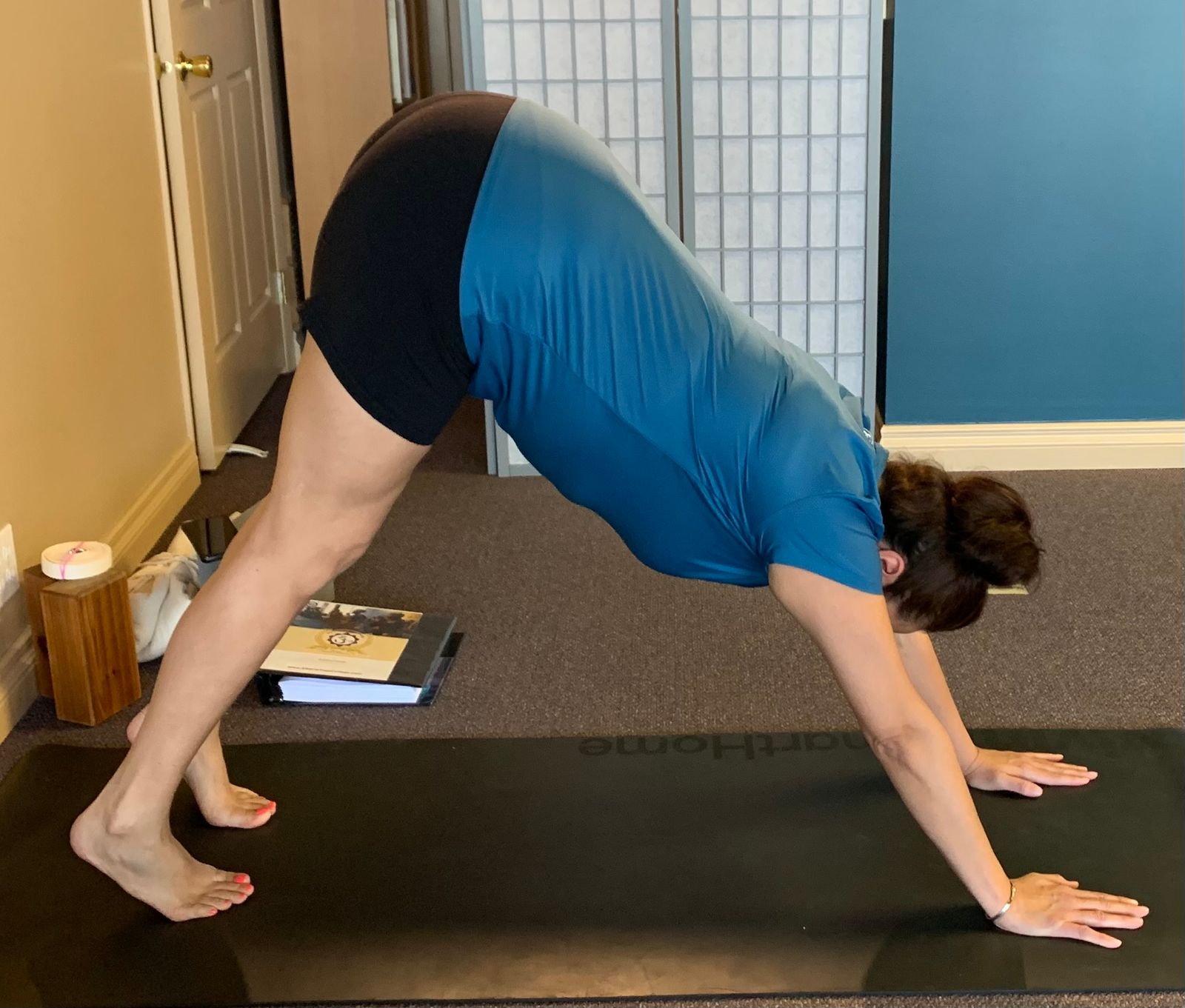
- Instead of “Press your heels to the floor in Downward Dog,” try “Bend your legs and move your chest toward the thighs first to open the shoulders—and then see whether your heels can come towards the floor without simply rounding the back.”
- Instead of “Reach the hand to the floor in Triangle,” try “Extend through both sides of the torso equally—see where your hand naturally lands.”

- Instead of “Push your knee out to the side in Tree Pose,” try “Explore where the knee wants to go without just turning the hips.”

These subtle reframes invite awareness rather than obedience. They’re less about positioning and more about inquiry. That’s where real yoga begins.
When Cues Become Dogma
If you’ve ever heard a student say “I can’t do that pose properly,” you’re witnessing the shadow of misapplied cueing. Somewhere along the line, the message became: the pose is right, you are wrong.
What if we flipped that?
What if we said: the pose is a suggestion, the student is the authority? Interoception trumps the teacher's words.
This isn’t chaos. It’s context. And it respects the lived experience of the person in front of us—especially older adults, those in pain, or anyone whose body doesn’t match the imagined ideal (which is, let’s be honest, all of us eventually).
The New Cue Ethic
So here’s my invitation to teachers and thoughtful practitioners:
Instead of asking “Is this alignment correct?” try asking:
- Is this cue helping the student feel more stable, safe, and spacious?
- Is it encouraging awareness or enforcing conformity?
- Does it serve a function—or just a form?
Yoga isn't about folding students into furniture shapes. It’s about unfolding their awareness.
Stay curious. Stay humble. And if your knee happens to drift past your ankle—relax. That’s how we walk up stairs.
Warmly,
Rob
The New Yoga: From Cult and Dogma to Science and Sanity

Rob Walker | JUL 31, 2025
Share this blog post